October 14, 2026
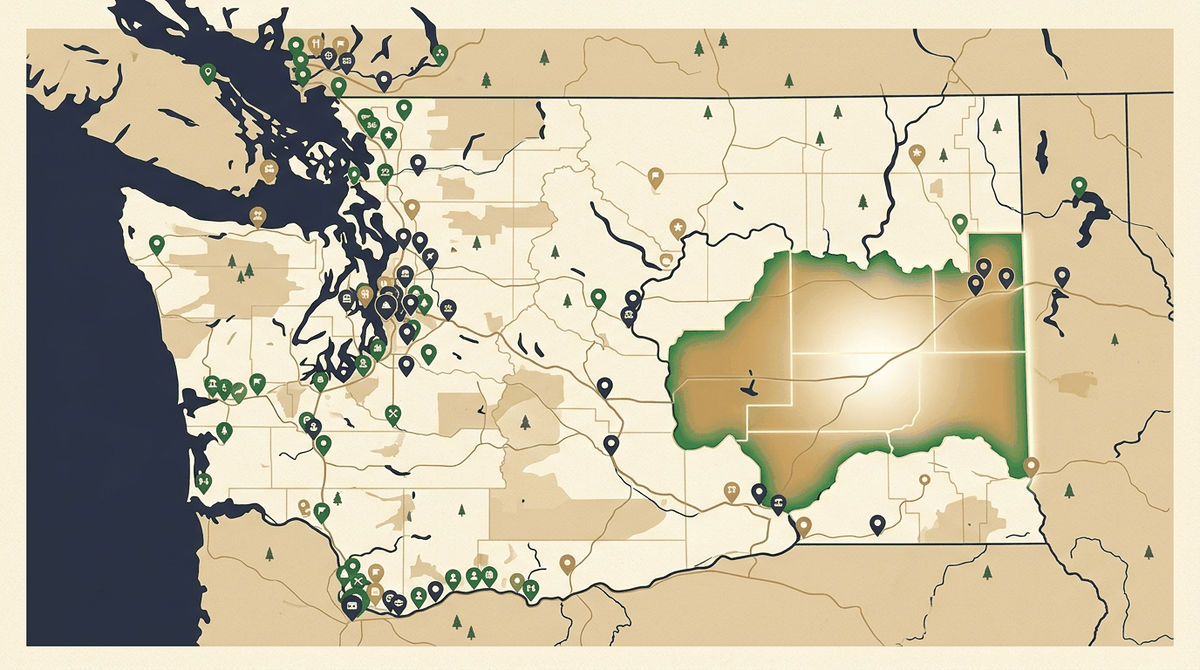
How to Find White Space Markets Without Overbuilding Your Store Network
Empty on the map is not the same as available. Score unserved markets against your winners and expand in order. Then get started with Tupll.
Read more → by Ambient Array
Notes on site selection, market intelligence, and making confident expansion decisions.
October 14, 2026
Empty on the map is not the same as available. Score unserved markets against your winners and expand in order. Then get started with Tupll.
Read more →
October 9, 2026
A lease is a bet placed years in advance. How a brand-specific demand forecast shrinks the risk before you commit. Then get started with Tupll.
Read more →
October 4, 2026
Most site analysis is data cleaning nobody sees. The pipeline that makes geographic data trustworthy and rankings defensible. Get started with Tupll.
Read more →
September 29, 2026
Distance lies. How drive-time bands, approach routes, and interception reveal whether customers can actually reach a site. Get started with Tupll.
Read more →
September 24, 2026
Why shortlisted sites blur together and how ranking them on one brand-trained model separates them. See the method, then get started with Tupll.
Read more →
September 19, 2026
The four layers of a site recommendation that survives the room, and the three killer questions to answer in advance. Get started with Tupll.
Read more →
September 14, 2026
A trade area is not a circle. How drive times, composition, and your own revenue data make trade area analysis decision-grade. Get started with Tupll.
Read more →
September 9, 2026
Why cannibalization hides in good-looking sites, and how network-level modeling catches it before the lease. Then get started with Tupll.
Read more →
September 4, 2026
Why promising and feasible are different words, and how to prove a market before committing capital. See the method, then get started with Tupll.
Read more →
August 30, 2026
What a site scoring model is made of, why the weighting must be visible, and how to tell rigor from a black box. Then get started with Tupll.
Read more →
August 25, 2026
One cannibalizing site can quietly cost seven figures over a decade. See the ROI of catching it early, then get started with Tupll.
Read more →
August 20, 2026
Spreadsheets, consultants, or software for site selection? See the real cost-crossover and where each breaks, then get started with Tupll.
Read more →
August 15, 2026
Incentives should break a tie, not make the deal. See why chasing an abatement into a weak market backfires, then get started with Tupll.
Read more →
August 10, 2026
A new pin can look like a win and still bleed capital. See what map-based growth really costs on the P&L, then get started with Tupll.
Read more →
August 5, 2026
A Tupll pilot is a low-risk backtest on a market you already know. See what a pilot looks like, then get started with Tupll.
Read more →
July 31, 2026
See how hold-out backtesting proves a site forecast against real first-year sales before you bet on it, then get started with Tupll.
Read more →
July 26, 2026
When your CFO asks where the number came from, glass-box math is your armor. Learn to defend a site forecast, then get started with Tupll.
Read more →
July 21, 2026
New stores that steal sales from your existing ones leave revenue flat. Learn to catch cannibalization early, then get started with Tupll.
Read more →
July 16, 2026
Brokerage data carries a built-in conflict of interest. See why independent analysis makes your recommendation defensible, then get started with Tupll.
Read more →
July 11, 2026
A defensible site forecast means you can open the hood for your CFO. See why glass-box modeling wins, then get started with Tupll.
Read more →
July 6, 2026
One analyst and thirteen new sites in three years does not add up. See how to close the expansion gap, then get started with Tupll.
Read more →
July 1, 2026
More data has not made site selection easier. See why synthesis and glass-box prediction beat a prettier heat map, then get started with Tupll.
Read more →